


Industrial Sealcoating
Professional Industrial Sealcoating Services
We specialize in the application of a high-performance protective layer to heavy-duty asphalt surfaces.
Protecting large-scale asphalt surfaces requires experience, precision, and commercial-grade materials.
Our industrial sealcoating services are designed to extend the life of high-traffic asphalt areas while maintaining a clean, professional appearance for your facility. From distribution centers and manufacturing plants to industrial parks and loading docks, we deliver durable sealcoating solutions built to withstand heavy equipment, constant vehicle movement, and harsh
weather conditions.
Industrial asphalt surfaces endure far more stress than standard parking lots. Oil spills, chemical exposure, heavy truck traffic, and seasonal temperature changes can quickly break down unprotected pavement.

Our professional sealcoating process forms a protective barrier that shields your asphalt from oxidation, water penetration, UV damage, and industrial contaminants.
Key Aspects of Industrial Sealcoating:
-
Purpose: Prevents oxidation, brittle asphalt, cracking, and potholes caused by heavy traffic and environmental exposure.
-
Application: Generally applied to commercial properties, sometimes featuring a sand slurry for increased durability.
-
Benefits: Reduces long-term repair costs, improves safety, and enhances the appearance of high-traffic areas.
-
Process: Involves cleaning the surface and applying a, or multiple, layers of industrial-grade sealer to prevent water penetration





The Process
-
Surface Preparation: The area is thoroughly cleaned using high-powered blowers or industrial sweepers to remove all debris and vegetation.
-
Crack Repair: Before sealing, minor cracks are filled with hot rubberized filler to prevent water from reaching the foundation.
-
Application: The sealant is typically applied in two coats using a combination of spray systems and squeegees for even coverage.
-
Curing: The surface must remain clear of traffic for approximately 24 hours to allow the coating to harden
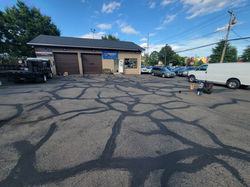
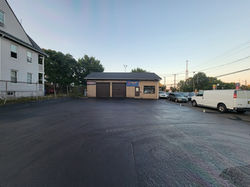
Industrial buildings and warehouses frequently top the list of locations with asphalt that experience heavy traffic.
Professional Procedure for Industrial Pavement
Our team follows a meticulous preparation and application process to ensure long-term performance. We begin with a thorough cleaning to remove dirt, debris, oil stains, and loose materials. Any cracks or damaged areas are repaired before the sealcoat is applied, creating a smooth and uniform foundation. Using high-quality commercial sealants and professional spray or squeegee application methods, we provide even coverage that bonds effectively to the pavement surface.


High-Quality Materials & Proven Techniques
Using premium commercial-grade sealants and advanced application techniques, we ensure an even, durable finish that restores the rich black appearance of asphalt while reinforcing its structural integrity. Proper surface preparation, crack filling, and careful application allow our sealcoating to perform at the highest level.
 |  |  |
|---|---|---|
 |  |  |
 |  |
Our Industrial Sealcoating Services Include:
-
Large-scale asphalt sealcoating
-
Industrial parking lot sealing
-
Warehouse and distribution center pavement protection
-
Loading dock and truck route sealcoating
-
Crack filling and asphalt surface preparation
-
Oil spot treatment and surface cleaning
-
Line striping and pavement markings

With the right maintenance plan, your industrial asphalt can remain durable, safe, and visually professional for years to come. Our sealcoating specialists deliver reliable workmanship, premium materials, and long-lasting results tailored specifically for industrial properties.
Industrial Sealcoating
Frequently Asked Questions
What is the purpose? Sealcoating acts as a protective barrier, preventing water intrusion, filling small voids, and replenishing oils lost to sun and oxidation.
Is it a repair? No, it is a preventative, cosmetic, and protective maintenance measure, not a structural repair for deep cracks or potholes.
How often? Generally every 2 to 3 years, depending on traffic, climate, and pavement condition.
When can I drive on it? While you may be able to walk on it within 4-8 hours, vehicles should stay off for at least 24–48 hours to prevent tire tracking.
When is the best time? Late spring or early summer (May/June) is ideal, when temperatures are 60*F - 86*F
How is it applied? It is applied by brush, squeegee, or spray.
What are the types of sealer? Refined coal tar-based and asphalt emulsion-based sealers are the two primary options, often blended with sand for durability.
Why do tire marks appear? Tire marks can appear 1–2 weeks after application, especially during humid weather, but they usually disappear as the sealer cures.
Can it be applied in any weather? No, it should not be applied if rain is expected within 24 hours or if the temperature is too low
What preparation is needed? The surface must be completely cleaned of dirt, debris, and oil stains.